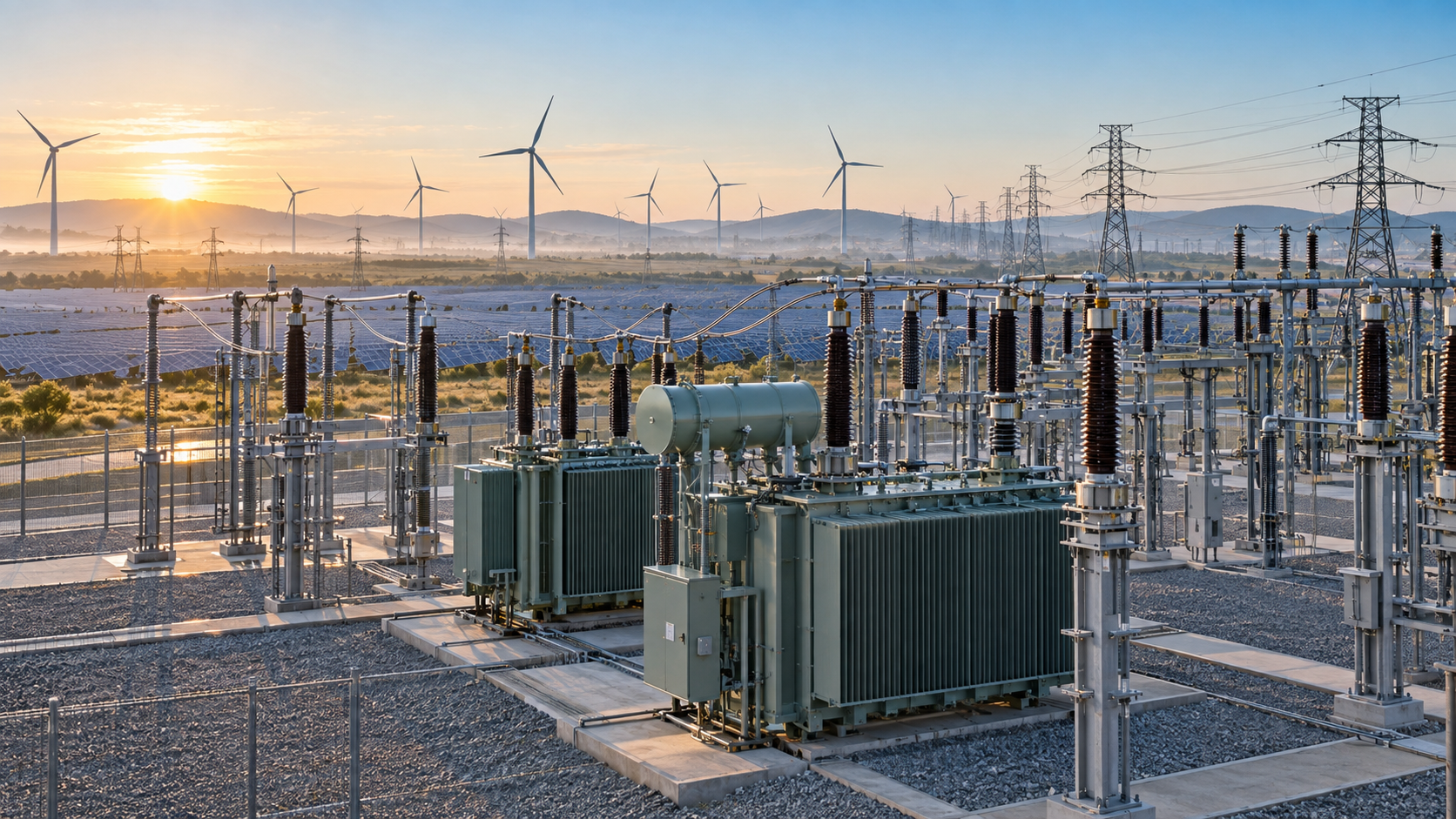
Grid connection queues are becoming a central issue for power-system developers. The International Energy Agency’s Electricity 2026 report says more than 2,500 GW of renewable generation, storage and large-load projects are waiting in connection queues worldwide. The report also identifies dynamic transformer rating as one of the technologies that can help networks use existing capacity more effectively.
Why Grid Queues Are Growing
New generation and large electrical loads can often be developed faster than transmission and substation infrastructure. According to the IEA, planning, permitting and completing major grid infrastructure can take 5–15 years, compared with shorter development cycles for renewable projects, data centres and EV charging. The result is a widening timing gap between demand for connections and the network capacity available to serve them.
The IEA estimates that annual grid investment would need to rise by about 50% by 2030 from today’s level of approximately USD 400 billion. Alongside new construction, utilities are therefore examining technologies that can safely unlock more capacity from existing assets.
What Dynamic Transformer Rating Does
Conventional transformer ratings are normally based on defined assumptions for load, ambient temperature, cooling and allowable temperature rise. Dynamic transformer rating uses measured operating conditions and a validated thermal model to estimate the capacity available at a particular time.
When ambient temperature is lower, cooling performance is strong or the preceding load has been moderate, the available short-term capacity may be higher than a fixed planning value. During hot weather or sustained heavy loading, the same monitoring system can show that the safe operating margin has narrowed.
Implications for Transformer Projects
Specify monitoring early. Winding and oil temperature indicators, ambient-temperature measurement, load data and cooling-system status should be defined before the transformer design is frozen.
Confirm the thermal model. The rating method should match the transformer construction, insulation system, cooling arrangement and applicable utility or project standard.
Plan system integration. Data interfaces, alarm thresholds, historian requirements and cybersecurity responsibilities must be coordinated with the substation control system.
Protect asset life. A dynamic rating is an operating tool, not permission to overload equipment without limits. Insulation ageing, bushings, tap changers, cables and upstream protection still have their own constraints.
A Complement to Grid Expansion
Dynamic rating cannot replace new substations, additional transformer capacity or network reinforcement where sustained demand exceeds the system design. It can, however, give operators better visibility of real operating margins and support more informed decisions while longer-term upgrades are planned.
For new transformer projects, the practical lesson is to treat monitoring and data requirements as part of the electrical specification—not as accessories added after manufacturing. Capacity, voltage ratio, impedance, cooling method, temperature limits, sensors and communications should be reviewed as one coordinated package.
Renewable and storage projects are continuing to reshape grid-connection demand. The U.S. Energy Information Administration reported that developers planned a record 86 GW of new utility-scale generating capacity for 2026, with solar representing ...
Artificial intelligence is moving from pilot projects into practical grid operations. The International Energy Agency’s September 2026 report Modernising Grids in the Age of Electricity says digital tools can improve forecasting, optimisation, sit...
Fast-charging networks are increasing both the number and the power rating of public charging points. The International Energy Agency’s Global EV Outlook 2026 reports that fast and ultra-fast chargers grew from 1.5 million in 2024 to 2.2 million i...
أصدرت «تحالف الشحن الصيني» تقريرًا عن حالة تشغيل البنية التحتية الوطنية لشحن وتبديل بطاريات السيارات الكهربائية في أبريل 2023. وفي أبريل 2023، زاد عدد محطات الشحن العامة بمقدار 67,000 محطة مقارنة بشهر مارس، مسجلةً زيادةً سنويةً...
 الفئات المميزة












إرسال استفسار عن المنتج
سنتصل بك في غضون 24 ساعة